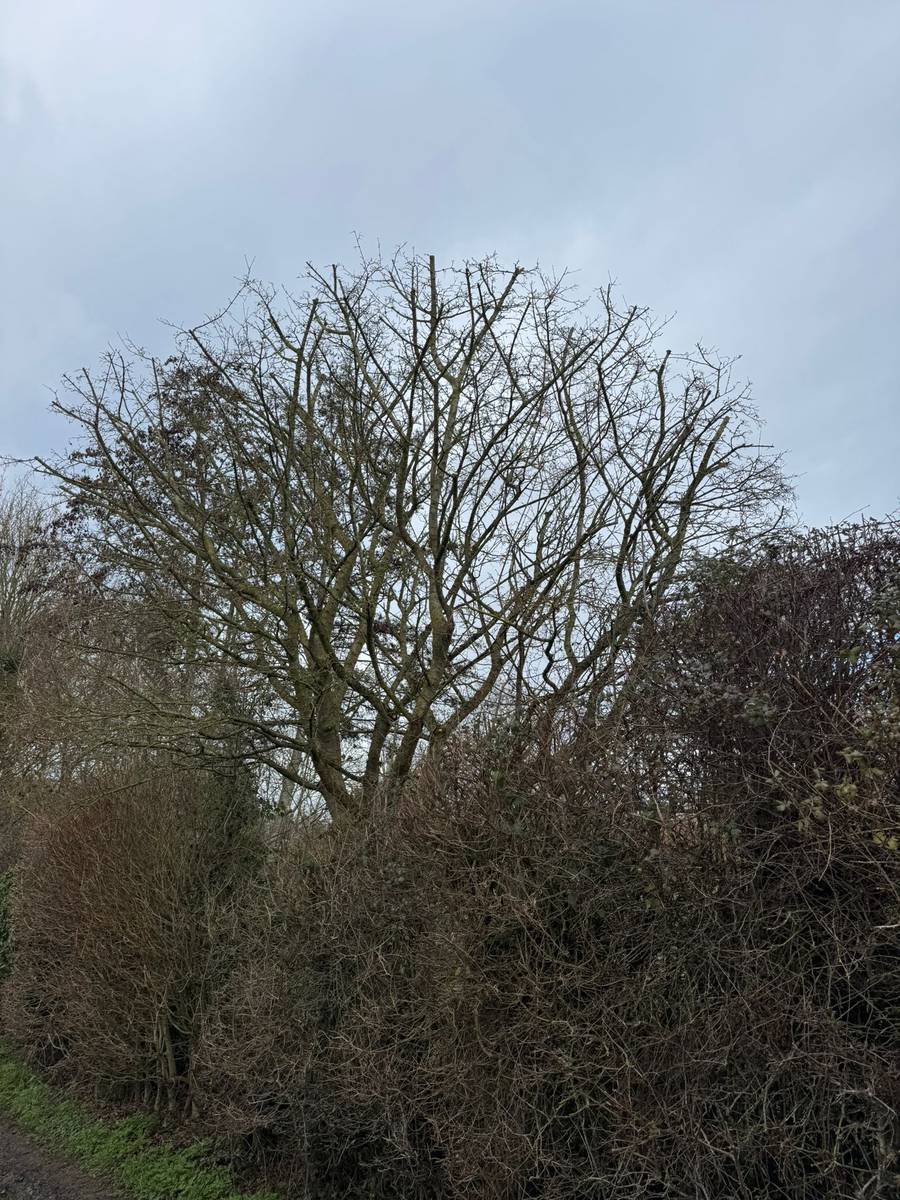
A tree overhangs the garage and the canopy blocks all your afternoon light. The natural reaction is "get it down." In my experience, that's the right call maybe 20% of the time. The other 80% is a reduction job — and that's usually the cheaper, safer and better-looking answer.
What a crown reduction actually does
A crown reduction is exactly what it sounds like: we take the outer edge of the canopy back by a measured amount — typically 20–30% — keeping the natural shape of the tree.
Done properly, a crown reduction:
- Lets significantly more light through to the garden below
- Takes weight off long lateral branches (reducing snap risk in a storm)
- Improves the tree's long-term shape and health
- Keeps the tree, the wildlife it supports, and the character it brings to a plot
When removal is the right call
There are jobs where a reduction won't solve the underlying problem. These are the ones where I'd recommend taking the tree down:
- Structural damage — splits, large cavities, fungal brackets at the base, heavy lean
- Severe dieback — the tree is unlikely to recover
- Wrong tree, wrong place — a leyland cypress that was planted 1 metre from a boundary 20 years ago is not going to stop being a problem
The grey area — and why a quote matters
Most of what I look at in Evesham and the surrounding villages falls somewhere in between. A big sycamore that's shading the whole garden might benefit from a 30% reduction and a crown lift — or it might be a better candidate for removal and replacement with something more suitable. You can't tell without being under the canopy with sight of the tree.
A rule of thumb: if the tree is structurally sound and in the right spot, reducing is almost always cheaper in the long run than felling and starting again with a new tree.
What a good arborist will tell you
Be wary of anyone who quotes for removal without looking at whether reduction would do the job. Felling is more work (and more money) than reducing, which means there's a temptation to go straight to the extreme. A decent tree surgeon should walk you through both options, price them separately, and explain why one is better than the other for your specific tree.
If you're not sure which your tree needs, get in touch. Quotations are free and I'll always tell you honestly whether a reduction is going to do the job — even if it means less work for me.
Not sure what your tree needs?
Free, no-obligation quotation — with honest advice on reduction vs removal.
Get a Quote →